Armenia
Yerevan
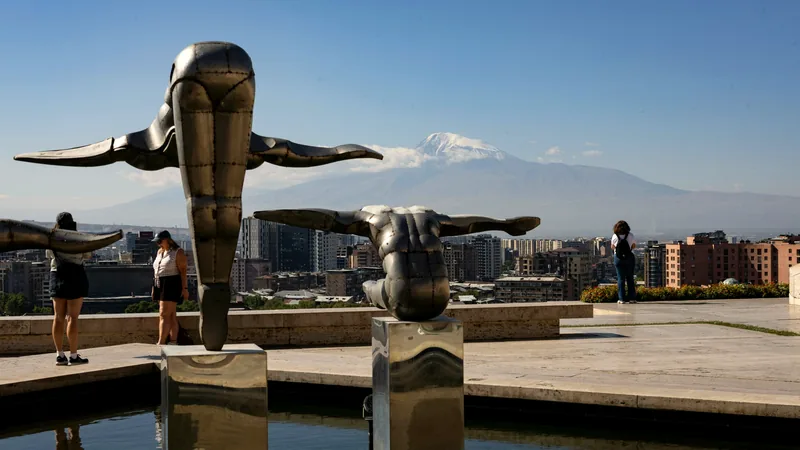
Yerevan is older than Rome. It was founded in 782 BCE as the fortress of Erebuni, and it has been lived in continuously ever since — though almost nothing you see was built before the 1920s.
A short history
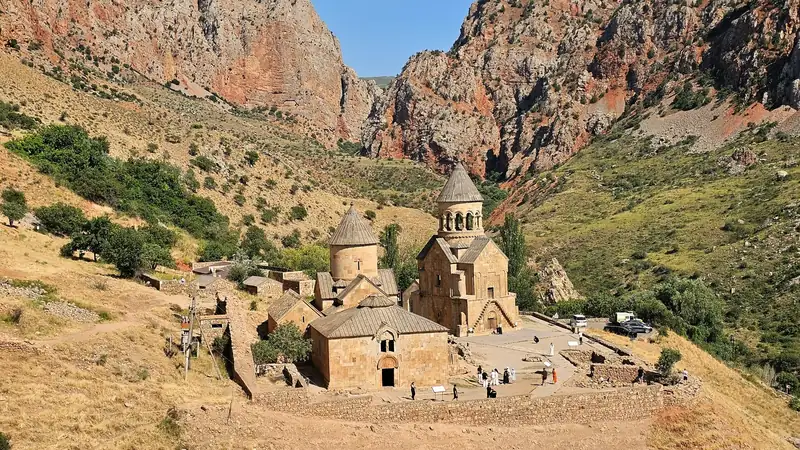
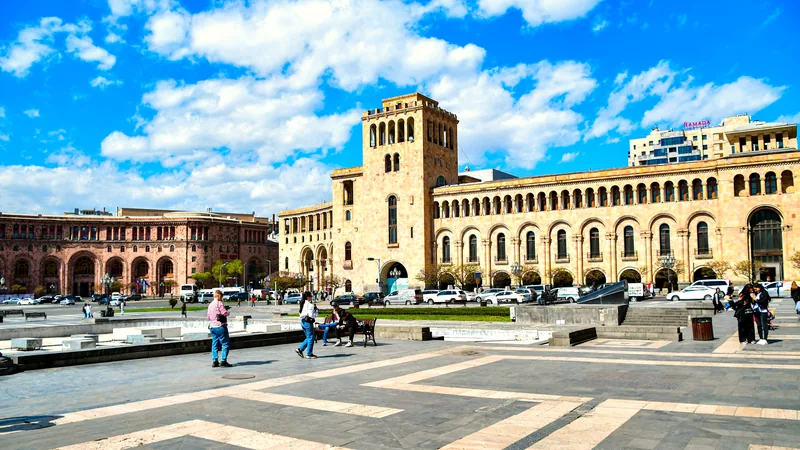
Armenia adopted Christianity as a state religion in 301 CE, the first nation anywhere to do so, and the monastery complexes scattered across the country are older than most European cathedrals — often cut directly into rock in valleys that take an hour or two to reach. The capital itself was rebuilt in the twentieth century to a single plan, in the local pink volcanic tuff, which is why its boulevards and squares feel unusually coherent for a city with three thousand years behind it.
Why travellers love it
Entry is straightforward for most visitors, the flights are short, and Mount Ararat sits on the horizon across the border in a way no photograph quite prepares you for. It is also a wine country with a long history and low prices, and a monastery-touring trip here feels nothing like a European cathedral circuit.
Before you go
Armenia is visa-free for many nationalities and offers an e-visa to others; check what applies to your passport. May to June and September to October are the best months — summer is hot and the winter is properly cold. The monasteries are the reason to leave the city, and most are a comfortable day trip; book a driver rather than relying on buses.
Highlights
- Republic Square
- The Cascade Complex
- A day trip to Geghard Monastery
- The Vernissage open-air market
Complete your trip
Two things worth sorting before you fly.
- Mobile data in ArmeniaAn eSIM you set up before you fly, so you are online the moment you land. Via Airalo.(opens in a new tab)
- Things to do in YerevanTours, attraction tickets and airport transfers, booked ahead. Via Klook, in English.(opens in a new tab)
Partner links: we may earn a commission, at no extra cost to you. Affiliate Disclosure
Read next
Tbilisi, Georgia
Tbilisi is built around warm springs — the name comes from the Old Georgian word for "warm" — and it has been rebuilt around them for fifteen centuries. Persian balconies, Orthodox domes and Soviet concrete stand within one view.