Japan
Tokyo
Tokyo was a fishing village called Edo until 1603. By 1720 it had more than a million people — decades before London or Paris reached that size — and it has rebuilt itself twice since.
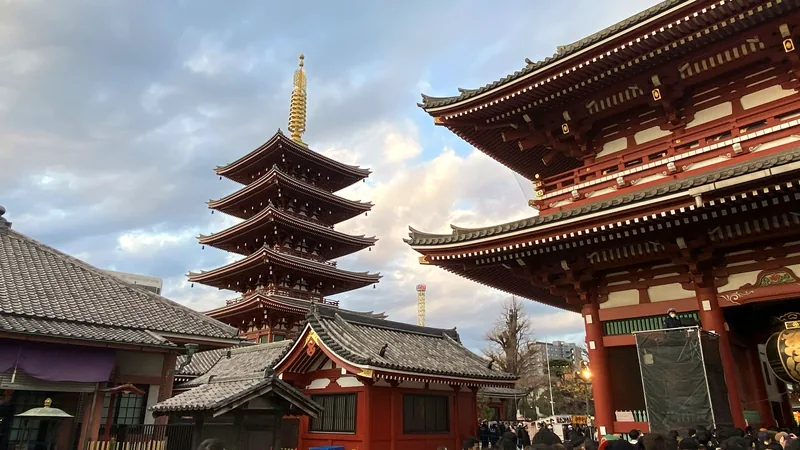
A short history
Edo became the seat of the Tokugawa shogunate in 1603 and grew into one of the largest cities on earth. It was renamed Tokyo, the Eastern Capital, in 1868. The twentieth century then took it apart twice — the 1923 earthquake and the bombing of the Second World War — and both times it was rebuilt quickly and at scale. That is the reason an ultra-modern skyline stands so close to preserved Edo-era temple districts: the new was not built over the old so much as beside it, wherever there was room.
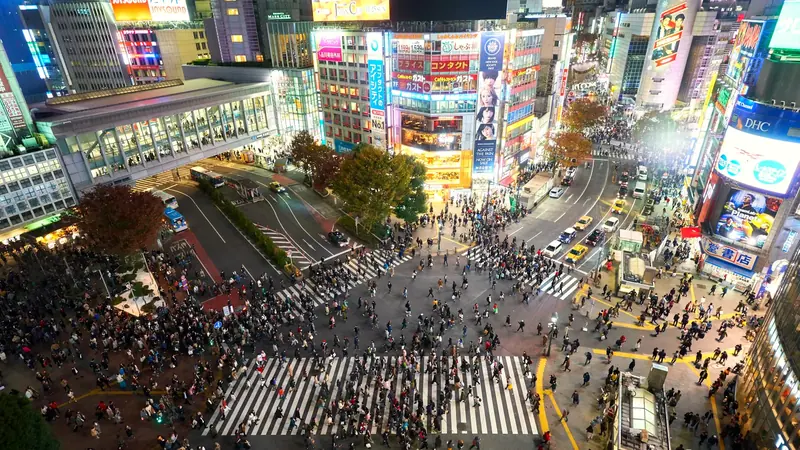
Why travellers love it
Few cities hold tradition and futurism at this distance from each other without one feeling staged. The food is exceptional at every price level, not only at the top, and it is one of the best-connected cities in Asia.
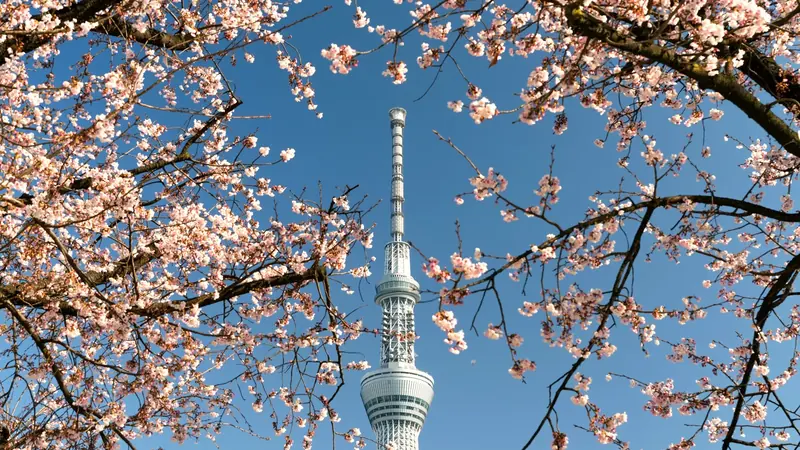
Before you go
Many nationalities enter Japan visa-free for short stays and others apply online; check your passport before booking. Late March to April is cherry blossom season and October to November is the autumn colour — both are beautiful and both are busy, so book early. Get an IC card at the airport for the trains, and carry some cash: Tokyo is far less card-friendly than its skyline suggests.
Highlights
- Senso-ji Temple in Asakusa
- The Shibuya crossing
- Tsukiji outer market
- The teamLab digital art museum
Complete your trip
Two things worth sorting before you fly.
- Mobile data in JapanAn eSIM you set up before you fly, so you are online the moment you land. Via Airalo.(opens in a new tab)
- Things to do in TokyoTours, attraction tickets and airport transfers, booked ahead. Via Klook, in English.(opens in a new tab)
Partner links: we may earn a commission, at no extra cost to you. Affiliate Disclosure
Read next
Seoul, South Korea
Seoul has been Korea's capital for more than six hundred years, and it rebuilt itself so completely in the second half of the last century that the transformation has its own name: the Miracle on the Han River.